
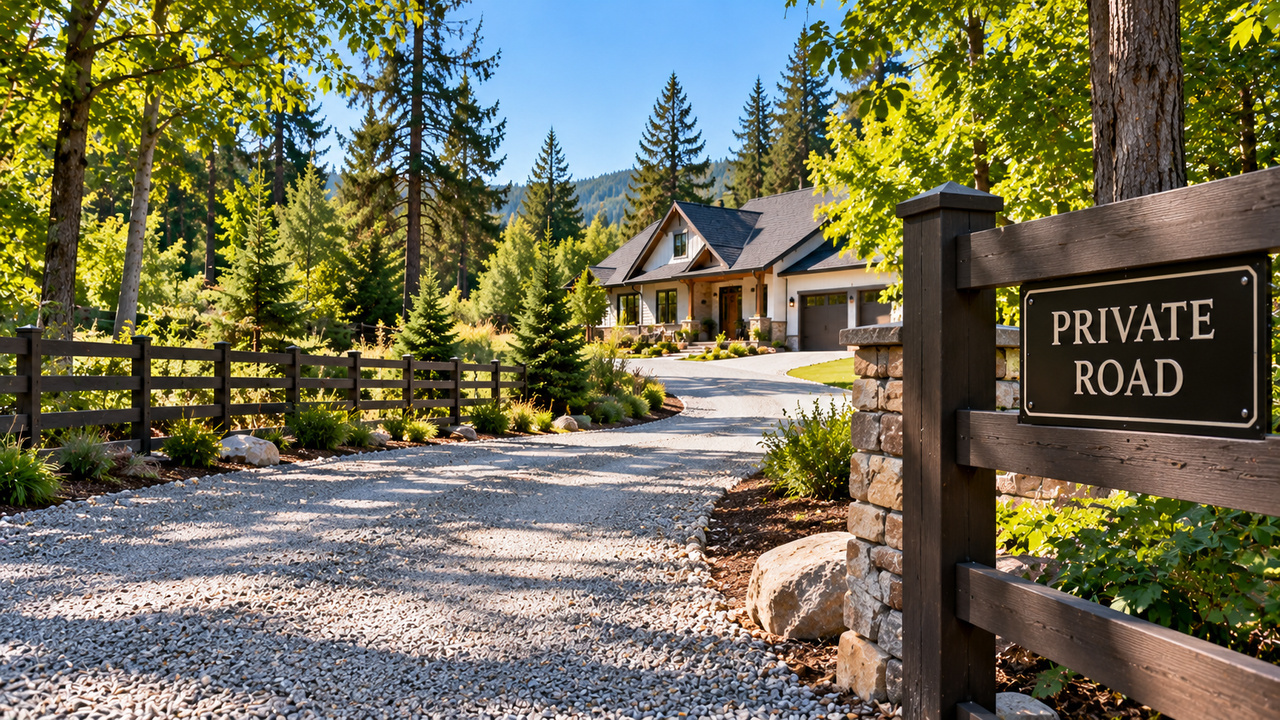
 A home tucked away at the end of a quiet private road may offer the privacy and space buyers have been looking for. Yet the road leading to the front door can raise questions that have little to do with the home’s appearance. Before purchasing, it is important to understand who has the right to use that road and who is responsible for maintaining it.
Private Roads Are Not All Alike
Unlike a public street typically maintained by a government agency, a private road may be owned or maintained by individual property owners, an association, or another private party.
Some private roads serve just two houses. Others provide access to an entire neighborhood. The road might be paved, gravel, or an unpaved driveway that crosses neighboring land.
The arrangement can affect both daily living and mortgage financing.
Legal Access Is Essential
A lender generally needs assurance that the property has acceptable legal access. If reaching the home requires crossing land owned by someone else, recorded easements or other property documents may establish that right.
A road that has been used informally for years is not necessarily the same as having a documented legal right to travel across it. Buyers should ask their title or closing professionals to clarify the access arrangement rather than assuming that visible tire tracks settle the question.
Who Handles Repairs and Snow Removal?
Private roads can require grading, pothole repairs, drainage work, paving, or seasonal maintenance. Depending on the location, snow removal may also be a significant responsibility.
A written road maintenance agreement may describe how costs are shared and who makes decisions. Mortgage programs have different requirements for private roads and maintenance documentation, so the lender should review the arrangement early.
Buyers also need to consider what happens when one neighbor does not contribute or when an expensive repair becomes necessary.
Consider Emergency and Everyday Access
Road width, steep grades, drainage, and surface condition can affect deliveries, moving trucks, emergency vehicles, and routine travel. A road that seems easy to navigate on a sunny afternoon may feel different after heavy rain or during winter weather.
Visit the road carefully, ask about recurring maintenance costs, and review any available agreements or association documents. If concerns arise, consult the appropriate professionals before removing contingencies.
A private road can be part of a property’s appeal. Understanding its legal access and ongoing responsibilities helps buyers decide whether the setting fits both their mortgage requirements and their long-term budget.
